Rowley vs. Endrew F.: How the Bar for Your Child's Education Changed in 2017
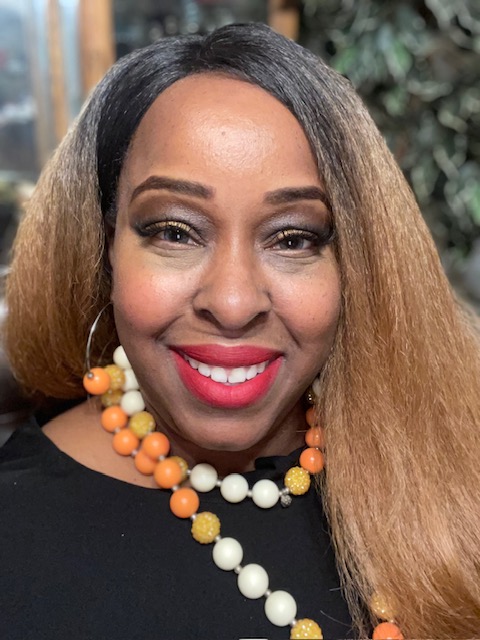
Tabaitha McKeever
Special Education Teacher & Advocate | Special Clarity
October 9, 2026
His IEP goals were almost identical for three consecutive years.
His parents had raised concerns at every annual review. The progress notes said "making some progress." The school said he was receiving a free appropriate public education. A hearing officer eventually looked at the three years of goals, the nearly identical baseline data, and the year-over-year "some progress" notes — and found a problem.
The school had been relying on a legal standard that the Supreme Court had already raised.
The Endrew F. decision is one of the most important developments in special education law in decades, and most parents have never heard of it. "Some progress" used to be enough for schools to claim they were meeting IDEA's requirements. It isn't anymore. The bar is higher, and knowing that changes what you can ask for — and what you can challenge — at every IEP meeting. — Tabaitha McKeever, Special Education Teacher
The First Case: Board of Education v. Rowley (1982)
The original Supreme Court standard for what IDEA requires came from a 1982 case, Board of Education of the Hendrick Hudson Central School District v. Rowley.
Amy Rowley was a deaf student whose parents argued she was entitled to a sign language interpreter in the classroom. The district said her grades were good and she was advancing from grade to grade — she was receiving educational benefit. The Supreme Court agreed with the district.
The Court held that IDEA requires an "appropriate" education — not the best possible education, not an education that maximizes a student's potential. As long as the student was receiving "some educational benefit," the FAPE requirement was satisfied.
This became known as the "some benefit" standard. For four decades, it shaped how courts evaluated IEP disputes.
The practical result: a school could point to almost any upward movement — a few more words read correctly, one more math problem solved — and call it educational benefit sufficient to satisfy IDEA. Minimal progress qualified.
The Second Case: Endrew F. v. Douglas County (2017)
In 2017, the Supreme Court took up Endrew F. v. Douglas County School District.
Endrew was a student with autism and ADHD. His behavioral challenges were significant. His parents felt his IEP goals had stagnated — that each year's plan was essentially a repeat of the last. They enrolled him in a private school, where he made meaningful progress. They sought reimbursement from the district, arguing the public school's program had failed to provide FAPE.
The Tenth Circuit, applying a narrow reading of Rowley, found that the district's program satisfied FAPE because Endrew had made some educational benefit — even if that benefit was minimal.
The Supreme Court reversed. Writing for a unanimous Court, Chief Justice John Roberts held that the "barely more than de minimis" standard was too low. IDEA's substantive standard, the Court said, is this:
A child's IEP must be "reasonably calculated to enable a child to make progress appropriate in light of the child's circumstances."
The Court was explicit: the old "de minimis benefit" interpretation of Rowley was wrong. An IEP that is "reasonably calculated to produce no more than de minimis progress" does not satisfy IDEA.
What Actually Changed
Endrew F. didn't throw out Rowley. It clarified what Rowley actually requires — and set a floor that is higher than many courts and districts had been applying.
The key phrase is "appropriate in light of the child's circumstances."
For a student in the general education setting: the IEP should be reasonably calculated to allow the student to advance from grade to grade.
For a student who cannot be in the general education setting: the IEP must still be reasonably calculated to make meaningful progress — but the benchmark is the child's individual circumstances, not grade-level expectations.
The standard is individualized. A goal that would constitute meaningful progress for one child might be inadequate for another. The question isn't whether any progress was made — it's whether the IEP was designed to produce progress appropriate for that specific child.
What This Means for Your Child's IEP
Goals that don't move are a red flag. If your child has had the same goals — or nearly the same goals — for two or three consecutive years, that's worth examining under Endrew F. An IEP designed to produce the same minimal progress year over year is not "reasonably calculated to enable progress appropriate to the child's circumstances."
"She's making progress" isn't enough on its own. Under the old interpretation of Rowley, minimal upward movement could satisfy FAPE. Under Endrew F., the question is whether the progress is appropriate — meaningful, not merely detectable. If a child is making 3% growth on a reading measure in a year, that's technically progress. It's probably not appropriate progress.
The IEP must be individually designed. Endrew F. emphasizes that the standard is child-specific. A generic IEP — one that could have been written for any student in the program — is harder to defend as "reasonably calculated" for the specific child in front of you. The IEP must reflect what this child needs to make appropriate progress.
Documentation matters more. Because the standard is now "reasonably calculated," districts need to show their work. What data supported this goal? What evidence led to this service frequency? Why does the team believe this plan will produce appropriate progress? If the district can't answer those questions, the IEP may not meet the standard.
How to Use Endrew F. in an IEP Meeting
You don't need to cite case law at the meeting — but you can use the principle.
When the team presents a goal, ask: "Based on the data you have, is this goal going to produce meaningful progress appropriate to where my child is starting? Or is this goal similar to last year's because we didn't meet last year's goal?"
When the school points to progress notes, ask: "What does appropriate progress look like for my child given their diagnosis, their starting point, and the research on what this disability typically requires?"
When goals haven't moved in a year: "What does the team believe caused the lack of progress, and how is this year's IEP different in a way that's reasonably calculated to produce different results?"
These questions shift the conversation from "is there any progress?" to "is the plan designed to produce progress appropriate for this specific child?" That's the Endrew F. standard — and it's a higher bar than what many districts are used to defending.
FAQ: Rowley, Endrew F., and What Schools Owe Your Child
What did Endrew F. change about what schools are required to provide? Endrew F. clarified that IDEA's FAPE requirement demands more than de minimis progress. A school must provide an IEP that is "reasonably calculated to enable a child to make progress appropriate in light of the child's circumstances." Simply showing some upward movement isn't enough — the question is whether the IEP was designed to produce progress that is meaningful and appropriate for that specific child.
Is the Rowley standard still in effect? Yes, but as clarified by Endrew F. Rowley established that IDEA requires an "appropriate" education, not the best possible education. Endrew F. raised the floor of what "appropriate" means. The two cases work together: Endrew F. rejected the "barely more than de minimis" interpretation of Rowley that many lower courts had been using.
My child's goals have been the same for three years. Does that violate Endrew F.? Not automatically — but it's a serious red flag worth investigating. If a child has the same IEP goals for multiple years without meeting them, either the goals are not being implemented effectively, or the goals aren't reasonably calculated to produce appropriate progress. Either way, the IEP team should examine why goals aren't being met and what needs to change. Endrew F. makes it harder for a district to justify a stagnant IEP as FAPE.
What is "appropriate progress in light of the child's circumstances"? The standard is individualized. For a student in the general education environment, the IEP should allow the student to advance from grade to grade. For a student who cannot be in general ed, the benchmark is meaningful progress for that specific child — taking into account their diagnosis, starting point, evidence-based interventions for their condition, and what progress looks like given all of that. There's no universal definition, which is exactly the point.
Can I cite Endrew F. in an IEP dispute? Yes. The case is Endrew F. v. Douglas County School District, 580 U.S. 386 (2017). It is binding Supreme Court precedent. Parents can cite it in IEP meetings, state complaints, and due process. Courts applying IDEA must use the Endrew F. standard when evaluating whether a district provided FAPE.
This post is for general educational purposes and does not constitute legal advice.
If your child's IEP goals haven't moved in a year — or the progress notes say "some progress" year after year without meaningful change — the IEP & ARD Paperwork Review Service will analyze whether the current IEP meets the Endrew F. standard and identify exactly what to push for at the next meeting.
For more on IEP goal quality and what appropriate progress looks like, read How to Tell if Your Child's IEP Goals Are Actually Measurable or visit the IEP Process hub.
Explore by Topic
Need tools to go with this?
Browse our ready-to-use templates and guides — built for parents like you.
Browse ProductsLeave a Comment
Share your thoughts
Want a deeper conversation? Join the Special Clarity Parent Community on Facebook →
You Might Also Like
IEP & School Rights
When the School Says 'We're Working on Staffing': What It Means and What to Say
Read article →
IEP & School Rights
SLP Wait Times Hit 6 Months: What to Do When Your Child's Speech Services Are Backlogged
Read article →
IEP & School Rights
Juvenile Arthritis and School: Pain, Fatigue, and the Accommodations Most Kids Don't Get
Read article →
Join the Conversation
Connect with other special needs parents in our Facebook community.
Join the Facebook Group →More free articles at our sister blog: McKeever Learning Center, LLC