Real Wins: What's Actually Getting Better for Special Needs Families
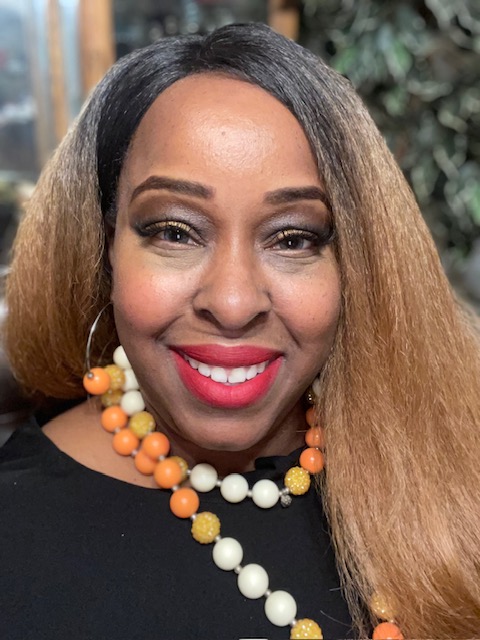
Tabaitha McKeever
Special Education Teacher & Advocate | Special Clarity
June 5, 2026
If you spend any time advocating in the special education system, it can feel like the news is always hard. Funding cuts. Service gaps. Insurance denials. Long waitlists. The system falling short in ways that affect your child every day.
That is real. And it deserves to be named and addressed.
But it is not the whole picture. Significant progress has been made for families of children with disabilities over the past several years — in the law, in the classroom, in medicine, in technology, and in how society understands and includes people with disabilities. That progress deserves to be named too.
This post is about what is genuinely getting better.
The Supreme Court Just Strengthened Your Legal Rights
In June 2025, the U.S. Supreme Court issued a unanimous 9-0 decision in A.J.T. v. Osseo Area Schools that represents the most significant legal win for special education families in nearly a decade.
The Court eliminated the "bad faith or gross misjudgment" standard that had made it extremely difficult for families to hold schools accountable for disability discrimination in several federal circuits. Schools can now be held liable when they know about a student's needs and fail to respond appropriately — under the same standard that applies in every other context covered by federal disability law.
This is not a small shift. It means families who have been failed by their school districts have a more meaningful path to legal accountability. It levels a playing field that was tilted significantly against parents.
Inclusion Rates Are at Historic Highs
One of the most meaningful measures of progress for students with disabilities is how much time they spend learning alongside their non-disabled peers.
In Los Angeles — one of the largest and most complex school systems in the country — the share of disabled students educated alongside their non-disabled peers has grown from 54% in 2003 to more than 90% in 2026. That is a generational shift in how one of America's largest districts serves its students with disabilities.
While there is still significant variation across districts and states, the trend toward more inclusive education is real and documented. More students with disabilities are spending more time in general education settings than at any point in the history of IDEA.
AAC Technology Has Transformed Communication Access
For children who cannot rely on verbal speech, the last decade has produced a revolution in augmentative and alternative communication (AAC) technology. What once required expensive, specialized hardware is now available on consumer tablets at a fraction of the cost. Robust communication apps with vocabulary systems sophisticated enough to support literacy and academic learning are widely available.
More children who were once considered "non-speaking" are communicating in ways that were not possible for their predecessors. More schools are implementing AAC with greater fidelity. More speech-language pathologists are trained in AAC practice. And more families are learning to support their child's communication at home with real tools and real training.
This is a genuine, life-changing advance — and it is still accelerating.
Dyslexia Identification and Support Has Improved Dramatically
Just a decade ago, many children with dyslexia went years without identification. Schools routinely avoided using the word "dyslexia" at all. Evidence-based structured literacy instruction was the exception, not the standard.
As of 2026, the majority of U.S. states have passed dyslexia legislation requiring screening, identification, and evidence-based intervention. Structured literacy — the approach the research has supported for decades — is now becoming standard practice in more and more schools. Children who previously would have spent years struggling without support are being identified and served earlier.
This progress is the direct result of years of advocacy by parents and disability rights organizations. Families pushed for these laws, and the laws are working.
Parent Communities Have Never Been More Connected or Powerful
A generation ago, a parent raising a child with a rare disability in a rural community was often truly alone — without peers who understood, without access to experts, without organized advocacy.
That isolation is no longer the default. Parent communities organized around specific diagnoses, ages, school systems, and advocacy goals have emerged across every platform. The collective knowledge and organized advocacy of these communities has produced real policy change — from dyslexia legislation to AAC coverage mandates to the A.J.T. Supreme Court case, which was itself supported by disability advocacy organizations who recognized its significance.
The information and community available to special needs families today is vastly better than what existed even ten years ago. That matters.
Early Intervention Research Keeps Getting Stronger
The evidence base for early intervention — particularly for autism, Down syndrome, language delays, and developmental disabilities — has grown substantially. Studies consistently show that early, intensive support produces better long-term outcomes across communication, adaptive behavior, academic skills, and quality of life.
This matters because it validates what families advocating for early services have always known: early intervention is worth fighting for, and the fight is worth having. The science supports you.
Self-Advocacy Is Being Taken More Seriously
The disability rights principle of "nothing about us without us" — the idea that people with disabilities should be involved in decisions that affect their lives — is gaining ground. More students with disabilities are participating in their own IEP meetings. More young adults with disabilities are in supported employment, post-secondary education, and community living arrangements that were not available to their predecessors.
The movement toward supported decision-making over guardianship — preserving the legal rights of adults with disabilities while providing the support they need — reflects a broader cultural shift in how disability is understood. People with disabilities are increasingly recognized as having the right to direct their own lives, not just to be served.
The Road Is Still Long — But It Is Going Somewhere
None of this means the system is where it needs to be. The gaps are real. The fights are real. The exhaustion is real.
But the arc of progress for people with disabilities over the past fifty years — since the passage of the Education for All Handicapped Children Act in 1975, which became IDEA — is genuinely remarkable. More children are being educated. More adults are living in communities. More families have legal tools to fight for what their children need. More technology exists to support communication, learning, and independence.
You are part of a community of families who have been fighting — and winning — for a long time. That is worth knowing.
Keep Building Your Toolkit
The progress that has happened is the result of families who showed up prepared, documented everything, and used every tool available to them.
Special Clarity exists to give you those tools — from IEP advocacy templates to benefits checklists to appeal letters — so you can keep winning the fights that are still in front of you.
The wins are real. So are you.
See all resources at Special Clarity →
The information in this post is for general educational purposes only. Statistical claims and legal developments referenced in this post are based on publicly available information current as of June 2026.
For more on your child's rights and available resources, visit our IEP vs. 504 Guide.
Explore by Topic
Need tools to go with this?
Browse our ready-to-use templates and guides — built for parents like you.
Browse ProductsLeave a Comment
Share your thoughts
Want a deeper conversation? Join the Special Clarity Parent Community on Facebook →
You Might Also Like
Getting Started
How Siblings Are Affected When a Child Has a Disability — and What Parents Can Do
Read article →
Getting Started
Caregiver Burnout: Recognizing It and Finding Support
Read article →
Getting Started
Summer Activities for Children With Disabilities: Ideas, Resources, and What to Look For
Read article →
Join the Conversation
Connect with other special needs parents in our Facebook community.
Join the Facebook Group →More free articles at our sister blog: McKeever Learning Center, LLC